PM-KUSUM · Ground-Mounted Monitoring
PM-KUSUM RMS & SCADA for Component A and Component C/FLS solar projects.
A practical field-to-portal monitoring architecture for ground-mounted PM-KUSUM projects in India. Synapse collects data from confirmed meters, inverters, and communication interfaces. Enercog configures telemetry, reporting, and commissioning workflows tailored to applicable DISCOM, SIA, and state tender standards.
Deployment Note: Standard RMS setups include edge acquisition, local non-volatile buffering, and DISCOM portal forwarding. Optional integrations include custom cloud dashboards and automated report dispatch.
- Component A (0.5–2 MW)
- Component C / FLS Feeder Solar
- Project-Confirmed Interfaces
Project Context & Scope
PM-KUSUM RMS scope starts with the component.
PM-KUSUM RMS monitoring is not a generic, one-size-fits-all package. Component A and Component C/FLS projects involve distinct plant topologies, feeder telemetry, metering interfaces, reporting protocols, and acceptance responsibilities. The state tender, utility interconnect, and Single Line Diagram (SLD) govern the exact scope.
Decentralised Ground-Mounted (0.5 to 2 MW)
Scoping for solar plants installed within 5 km of 33/11 kV substations. Telemetry interfaces cover string inverters, bidirectional ABT check meters, and DISCOM cloud uplinks.
Feeder-Level Solarisation
Integration across dedicated agricultural feeders. Telemetry maps solar generation, feeder breaker status, export/import active power, and state monitoring servers.
Retrofit or Tender Audit
Evaluate existing plants requiring RMS compliance upgrades. We review equipment register maps, communications availability, and State Nodal Agency (SNA) portal specifications.
Telemetry Architecture
From field signals to a reliable portal handoff.
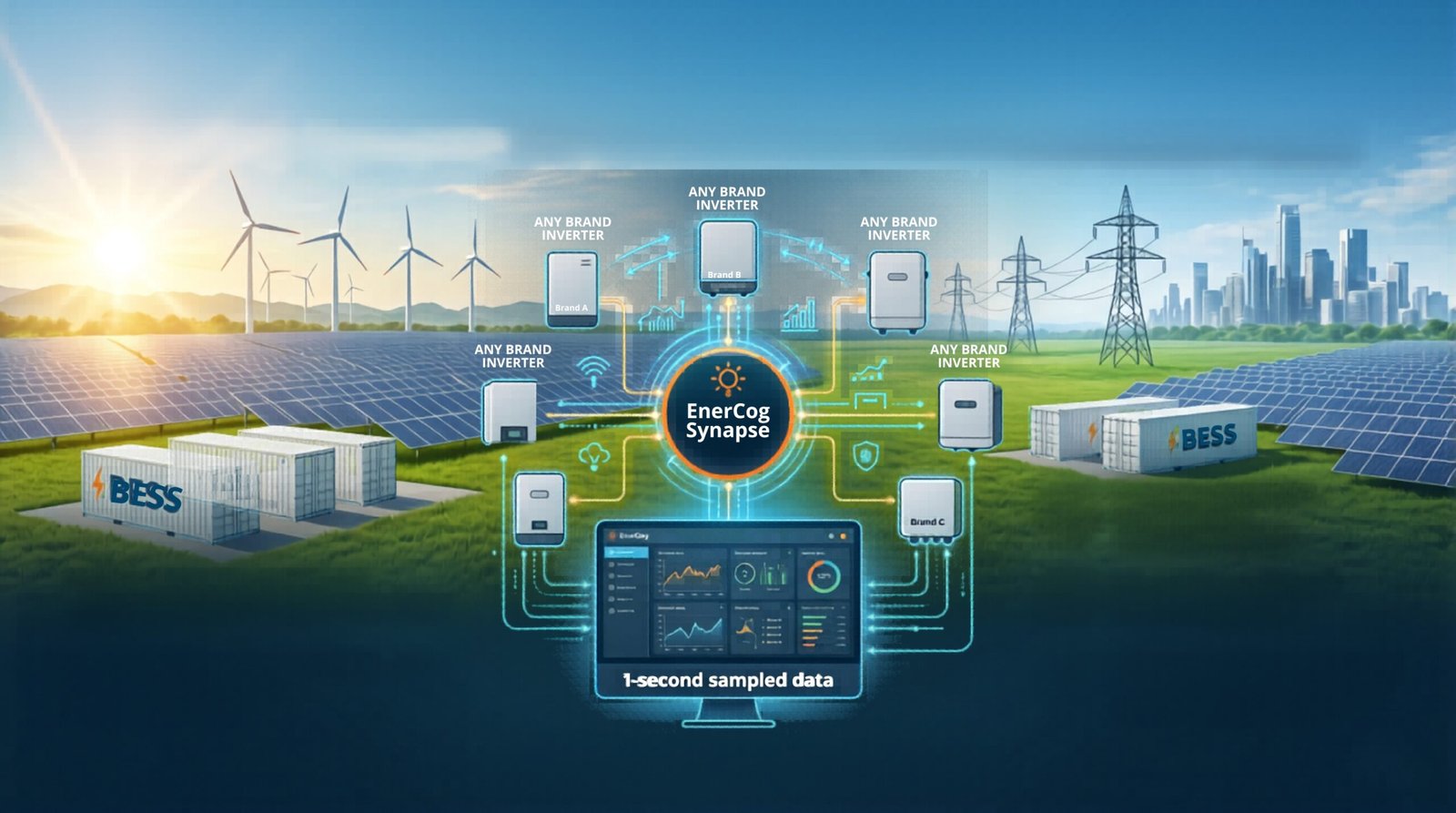
Synapse edge RTUs acquire and map field parameters from inverters and meters with local optical isolation. The PM-KUSUM RMS platform aggregates data into structured telemetry streams, alarms, and regulatory reports. DISCOM portal credentials, payload formats, and acceptance documentation remain clearly delineated.
For overarching national guidelines, refer to the official MNRE PM-KUSUM portal.
Interface Capabilities: Configurable protocols include isolated RS-485 Modbus, IEC 60870-5-104 for SLDC integration, and Ethernet Modbus TCP. Final interfaces are verified against device register maps.
-
RS-485 ModbusIsolated serial field bus
-
IEC 60870-5-104Telecontrol & SLDC
-
4G LTE / Dual SIMCellular cloud uplink
-
Modbus TCP / IPHigh-speed local network
Engineering Governance
Know what must be accepted before commissioning.
A successful PM-KUSUM RMS deployment requires confirming device register maps, telemetry buffer capacity, and DISCOM portal APIs prior to site installation.
Explore the Synapse edge RTU engineered for rugged industrial DIN-rail deployment.
Synapse Edge Gateway
Industrial-grade DIN-rail telemetry controller with isolated RS-485 serial ports and 4G LTE cellular connectivity for solar plants.
-
Connect Approved Field EquipmentMap inverter models, multi-function energy meters, and weather sensors against verified manufacturer register maps.
-
Reliable Communication & Optical Isolation2.5 kV galvanic isolation on serial interfaces prevents field ground loops from disrupting telemetry gateways.
-
Non-Volatile Local Data BufferingBuffer timestamped generation parameters locally during cellular outages and execute auto-reconciliation upon link restoration.
-
Defined Portal Payload HandoffValidate JSON / MQTT payloads, encryption certificates, and API endpoints mandated by State Implementation Agencies (SIAs).
-
Explicit Control BoundariesMaintain separation between passive RMS monitoring and active Power Plant Controller (PPC) functions. If grid curtailment or dynamic PF control is required, review our Solar SCADA/PPC scope.
Commissioning Roadmap
A clear 7-stage route from tender inputs to handover.
Procurement Clarity
Who owns each layer in PM-KUSUM RMS delivery?
A transparent RACI matrix prevents project delays and clarifies responsibilities between equipment suppliers, EPC contractors, RMS automation providers, and DISCOM authorities.
| Architecture Layer | Core Responsibilities | Key Pre-Requisites to Confirm |
|---|---|---|
| Inverters & ABT Meters | OEM parameter generation, Modbus registers, local protection tripping, and warranty. | Confirmed model numbers, communication firmware, and RS-485 wiring polarity. |
| Synapse Edge RTU | Field data acquisition, protocol translation, timestamp buffering, and secure cellular uplink. | Plant SLD, point list, local SIM network coverage, and 230V AC / 24V DC auxiliary power. |
| Local SCADA / RMS | Real-time dashboard, string monitoring, inverter alarms, daily yield reports, and historian. | User access roles, email/SMS notification recipients, and export requirements. |
| DISCOM / SIA Portal | Central server infrastructure, data ingestion APIs, subsidy clearance, and compliance verification. | Tender-mandated API documentation, static IP whitelisting, and encryption keys. |
| EPC Contractor & Developer | Physical panel mounting, field conduit cabling, meter test certificates, and site coordination. | Civil/electrical readiness, commissioning schedules, and DISCOM inspection dates. |
Frequently Asked Questions
Choose the right PM-KUSUM RMS scope before you specify it.
Common questions answered for EPCs, solar developers, and project engineers working on PM-KUSUM Component A and C tenders.
Does this PM-KUSUM RMS support both Component A and Component C?
Yes. Our solution covers Component A ground-mounted solar plants (0.5 MW to 2 MW) and Component C feeder-level solarisation (FLS). The exact telemetry parameters, logging frequency, and portal forwarding formats are configured based on the state DISCOM tender (e.g. MSEDCL, GUVNL, RRECL).
Is this RMS different from standalone solar pump monitoring (Component B)?
Yes. Standalone solar water pumps under Component B use simple low-data cellular loggers. Component A and Component C projects are grid-connected power plants requiring multi-channel RS-485 Modbus RTU integration across multiple string inverters, bidirectional ABT check meters, and grid-interface relays.
Can Enercog interface with multi-vendor inverters and energy meters?
Yes. Synapse supports standard Modbus RTU/TCP protocols and pre-configured register profiles for leading solar inverter brands and Class 0.2S / 0.5S multi-function ABT meters. Custom register profiles are validated prior to site commissioning.
How does the RMS handle cellular network dropouts in rural areas?
Synapse features local non-volatile flash memory that automatically buffers timestamped generation and telemetry logs during network outages. Once 4G LTE cellular connectivity resumes, the system executes an automated chronological replay to the cloud portal without data loss.
What documentation is required to initiate an RMS engineering review?
To scope your project, share: (1) Component type (A or C/FLS) and state, (2) Plant capacity (MWp) and Single Line Diagram (SLD), (3) Inverter make/model and meter details, and (4) DISCOM or SIA telemetry guidelines. Our team will return a confirmed interface map and scope proposal.
Technical Review
Bring your component, tender, and point list. We’ll map the monitoring path.
Enercog helps solar developers and EPCs configure procurement-grade PM-KUSUM RMS telemetry architectures that pass state inspection and DISCOM portal verification smoothly.
Readiness Boundary: Hardware gateways and firmware configurations are bench-tested in our Pune facility. Commissioning sign-off and portal handshakes are verified against confirmed project Single Line Diagrams.
Submit your plant SLD and equipment list for an automated RMS telemetry review.