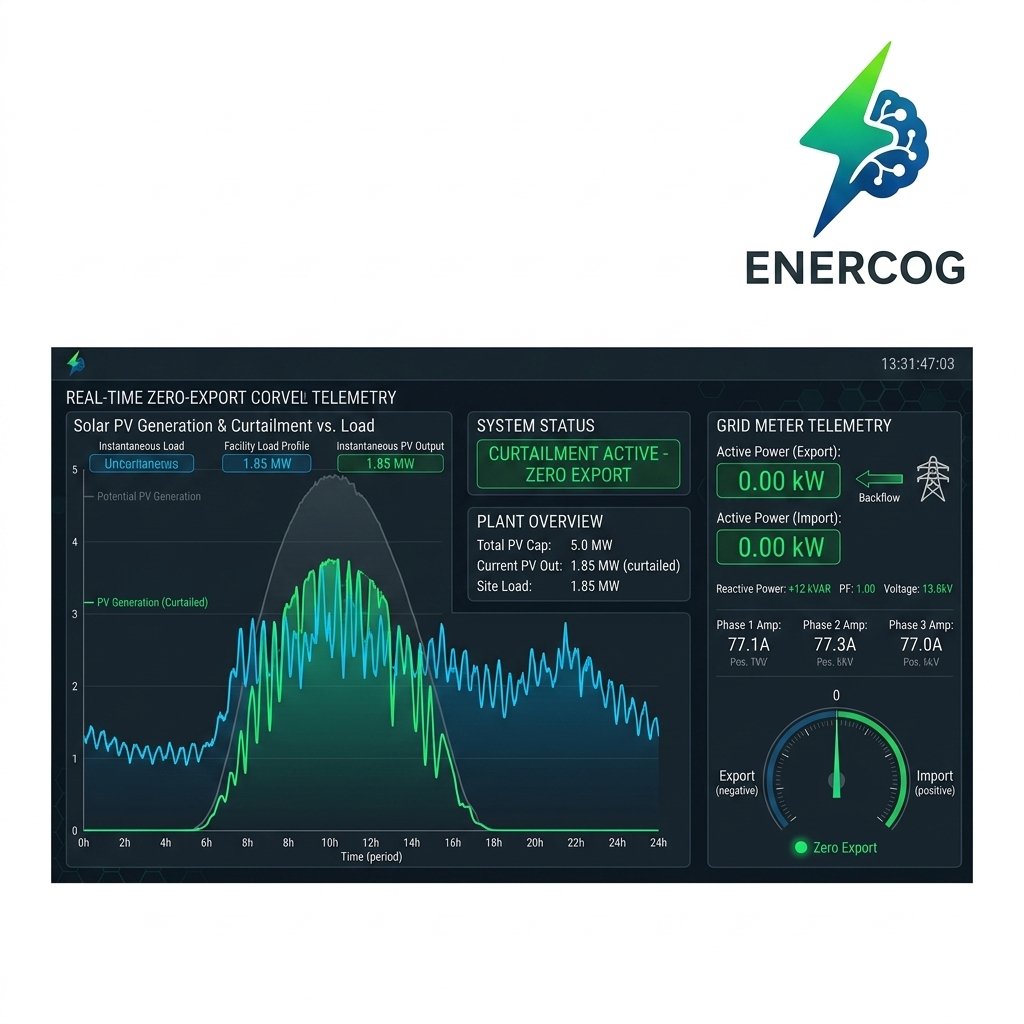
Reverse Power Flow Mitigation: Algorithmic Zero-Export Control for Indian C&I Solar Microgrids
For Commercial and Industrial (C&I) solar installations in India, exporting power to the grid without a net metering agreement violates state utility regulations, triggering automatic circuit breaker trips or heavy reverse-power penalties. Dynamic zero-export devices prevent these issues by continuously monitoring grid-connection points and curtailing inverter active power outputs in real-time.
The Grid Reality for Indian C&I Consumers
State Electricity Regulatory Commissions (such as the Maharashtra Electricity Regulatory Commission—MERC, and the Tamil Nadu Electricity Regulatory Commission—TNERC) enforce strict guidelines for behind-the-meter solar assets. Under standard net-billing or open-access arrangements, unauthorized power injection into the utility grid is categorized as a grid violation. Central Electricity Authority (CEA) Technical Standards for grid connectivity mandate that distributed generation units must not destabilize the local distribution transformer. When a factory’s internal load drops suddenly—for example, during lunch hours or batch changes—excess solar generation immediately flows backward toward the grid. DISCOM utility meters detect this reverse flow and trip the primary breaker, causing expensive production outages.
Why Passive Reverse Power Protection Fails
Traditional setups use passive reverse-power relays (Device 32). These relays operate on a binary threshold. Once reverse power flow exceeds 2% of the transformer capacity for more than 1.5 seconds, the relay disconnects the entire solar plant or trips the main breaker. This binary approach causes severe thermal stress on DC switches and results in substantial solar energy waste. To avoid breaker trips, operators often manually set high safety margins, keeping solar generation far below actual factory demand, which reduces the return on investment (ROI) of the solar asset by up to 25%.
Active Algorithmic Curtailment vs. Passive Protection
| Control Parameter | Passive Binary Relays (Device 32) | Active PID Control (Enercog Clarity) |
|---|---|---|
| Grid Response Time | 1,500 ms to 2,000 ms (Relay trip time) | Under 800 ms (Modbus curtailment command) |
| Solar Plant Availability | Low (complete shutdown on trip events) | High (continues operating at reduced output) |
| Power Injection Limit | Hard cut-off (binary switch) | Precision throttling (keeps export below 0.1%) |
| Asset Thermal Stress | High (abrupt DC current interruption) | Low (smooth power setpoint ramping) |
The Sub-Second Active Throttling Architecture
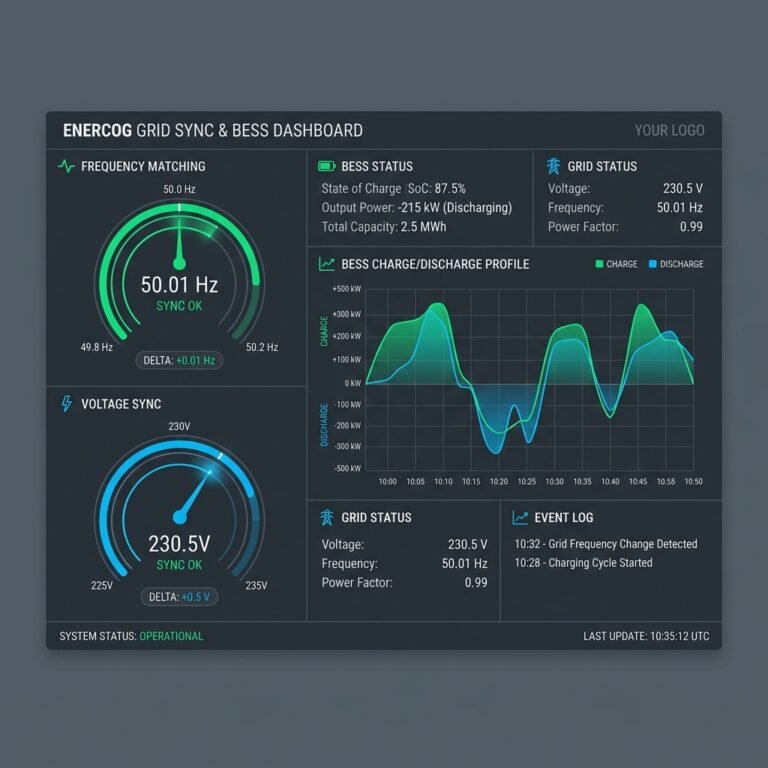
Active zero-export control requires a high-speed telemetry loop. A smart energy meter installed at the main grid connection point measures active power direction and magnitude. This data is fed into an edge controller via Modbus TCP or RTU at 100-millisecond intervals. If the load drops and reverse power begins to register, the controller executes a Proportional-Integral-Derivative (PID) algorithm to calculate the exact curtailment required. It then broadcasts new active power setpoints to all grid-tied solar inverters. Enercog Clarity integrates this sub-second loop, executing power reduction within 800 milliseconds, well before the DISCOM’s grid protection relays can activate.
“C&I rooftop solar is only financially viable if the factory stays online. If your zero-export controller trips the main utility breaker due to slow feedback latency, the resulting facility downtime costs far exceed any solar generation savings,” notes Anand Meshram, CEO of Enercog Innovations.
To prevent grid trips and optimize internal consumption, explore our dedicated zero export device solution page, or contact our engineering team to request a site integration audit.