Automated Soiling Loss Analytics: Algorithmic Wash Cycle Optimization for Indian Solar IPPs
Dust accumulation on solar panels degrades generation by 0.5% to 1.5% daily in arid regions like Rajasthan and Gujarat. Transitioning from fixed-interval cleaning schedules to dynamic, algorithm-driven soiling analysis optimizes wash cycles, maximizing solar asset net present value while minimizing water procurement and cleaning labor expenditures.
The Economic and Environmental Reality of Soiling in India
In high-dust corridors, such as Bhadla or Kutch, dry-season particulate matter rapidly deposits on PV modules. Independent Power Producers (IPPs) frequently clean modules on a static 10-day or 15-day cycle. However, this static approach fails to account for seasonal dust storms or regional water restrictions. State Electricity Regulatory Commissions (such as the Gujarat Electricity Regulatory Commission—GERC) and local ground water boards restrict excessive water usage for solar cleaning. With ground water costs climbing and solar tariffs compressed, washing panels too frequently decreases profitability, while washing too rarely leads to severe generation loss.
String-Level DC Mismatch vs. Static Cleaning Schedules
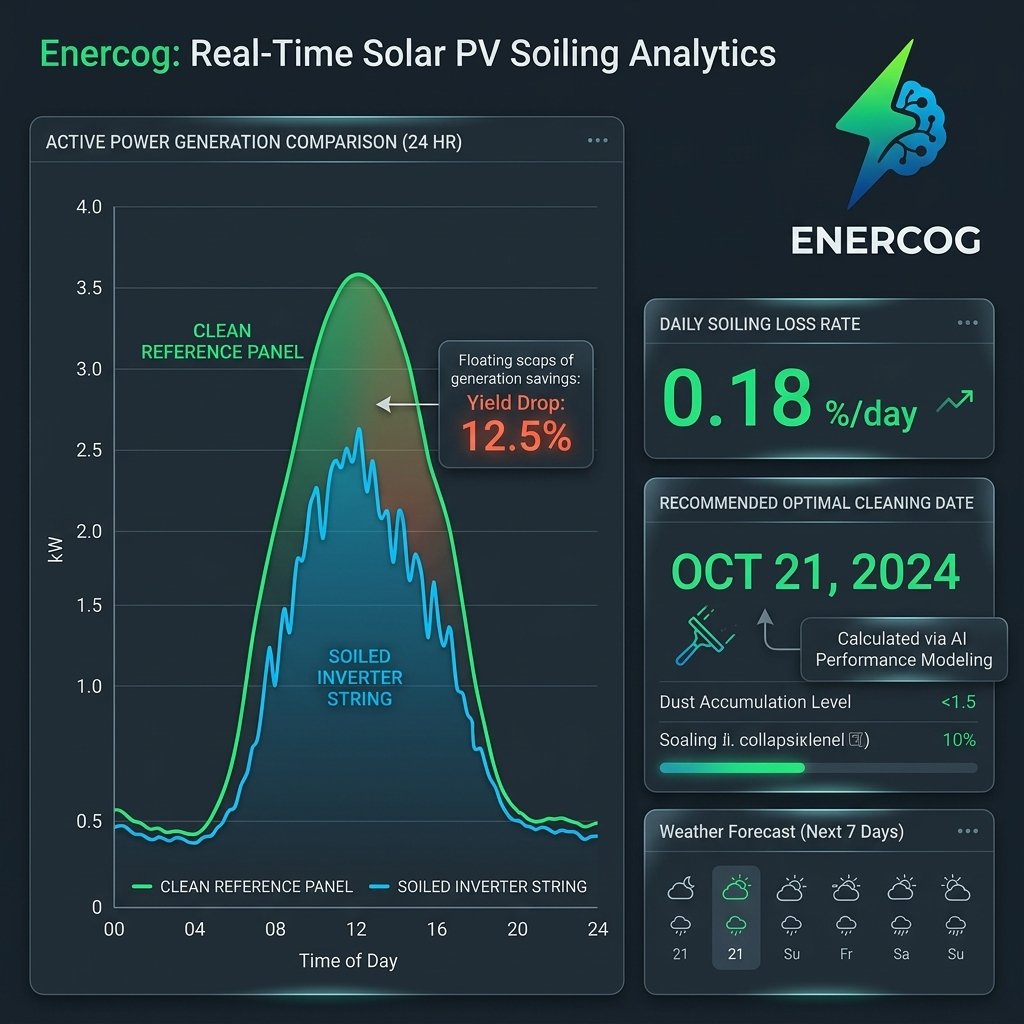
Identifying soiling levels without physical inspection requires analyzing electrical telemetry. Traditional methods rely on pyranometer comparison, which is prone to sensor drift. A more precise method uses string-level DC current mismatch analysis. By comparing the daily output curve of active inverter strings against clean reference panels, the edge controller computes the exact deviation. Enercog Clarity integrates this string telemetry, isolating localized soiling patterns and distinguishing dust buildup from electrical degradation.
Comparing Cleaning Optimization Strategies
| Parameter | Static 15-Day Wash Cycle | Dynamic Algorithmic Wash Optimization |
|---|---|---|
| Decision Metric | Time-elapsed (15 days) | Real-time soiling loss percentage |
| Yield Recovery | Suboptimal (leaks energy during storms) | Optimal (triggers wash when yield gains exceed cleaning costs) |
| Water Consumption | 20% to 30% higher | Optimized to regulatory limits |
| Cost Efficiency | High variance in cleaning NPV | Maximized NPV based on current system marginal price |
The NPV-Optimal Wash Algorithm
The dynamic wash algorithm continuously calculates the marginal financial recovery of a clean. If the cumulative value of recovered generation (based on current power tariffs or system marginal prices) exceeds the cost of a wash cycle (labor, water, and machine wear), the system triggers a wash order. For a 100 MWp asset in Rajasthan, implementing dynamic soiling analysis reduces water waste by 25% and recovers ₹1,20,000 in net monthly generation margins.
“Utility-scale solar in India operates on thin margins. When developers clean panels on a static schedule without analyzing string-level DC deviations, they either waste scarce water or let dust eat their yield. Optimizing cleaning schedules using telemetry is the only way to protect project IRR,” explains Anand Meshram, CEO of Enercog Innovations.
To implement real-time dirt detection and optimize clean cycles, explore our dedicated soiling analysis solution page, or see how our Clarity UI integrates string-level performance dashboards.